
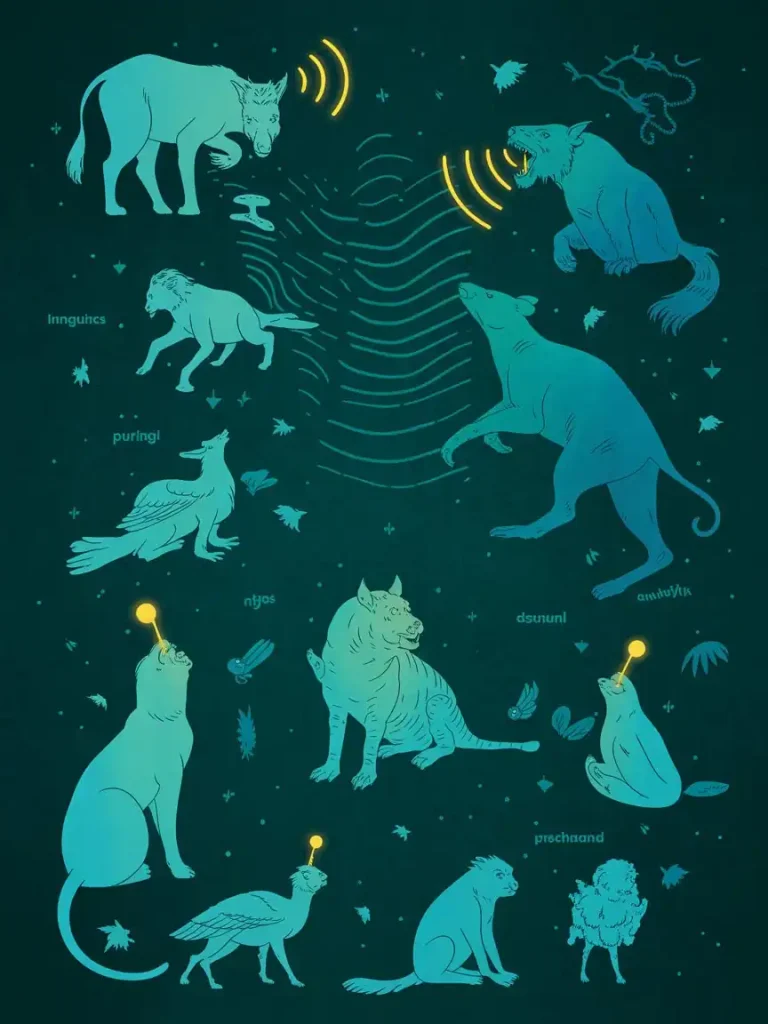
Animals communicate in ways that go far beyond simple sounds or signals. From complex languages to invisible cues, many species exchange information in ways that seem almost unbelievable. Here are 25 fascinating facts about animal communication that feel impossible but are entirely real.
Complex Vocal Communication
- Dolphins use unique signature whistles that function like individual names.
- Whales can produce songs that travel hundreds of miles through the ocean.
- Birds can learn and mimic intricate sequences of sounds, including human speech.
- Prairie dogs have alarm calls that describe the size, speed, and type of predator.
- Some parrots can understand context and use words meaningfully in communication.
Visual and Body Language Signals
- Octopuses change color and texture to send signals to other octopuses.
- Bees perform a waggle dance to communicate the direction and distance of food sources.
- Dogs use body posture, tail movement, and facial expressions to communicate emotions.
- Chameleons shift colors not just for camouflage but also for social signaling.
- Cuttlefish flash rapid patterns across their skin to communicate with others.
Chemical Communication
- Ants leave scent trails to guide others to food.
- Moths release pheromones that can attract mates from miles away.
- Elephants use chemical signals in urine to convey reproductive status.
- Salmon use smell to navigate back to their birthplace to spawn.
- Termites communicate colony roles and alerts through chemical signals.
Vibrations and Hidden Signals
- Spiders detect vibrations in their webs to identify prey or mates.
- Elephants send low-frequency vibrations through the ground to communicate over long distances.
- Some fish produce drumming sounds using specialized muscles.
- Kangaroo rats thump the ground to warn others of danger.
- Treehoppers communicate through plant vibrations rather than air sounds.
Truly Unbelievable Methods
- Fireflies use precise light patterns to signal and attract mates.
- Electric fish generate electrical signals to communicate and navigate.
- Ravens use gestures like pointing with their beaks to share information.
- Some crabs wave their claws in rhythmic patterns to attract partners.
- Certain frogs inflate vocal sacs that amplify their calls and signal strength to rivals.
Conclusion
Animal communication is far more advanced and varied than it appears on the surface. These incredible methods reveal a hidden world of interaction that rivals human language in creativity and complexity. The more we study these systems, the more astonishing they become.