
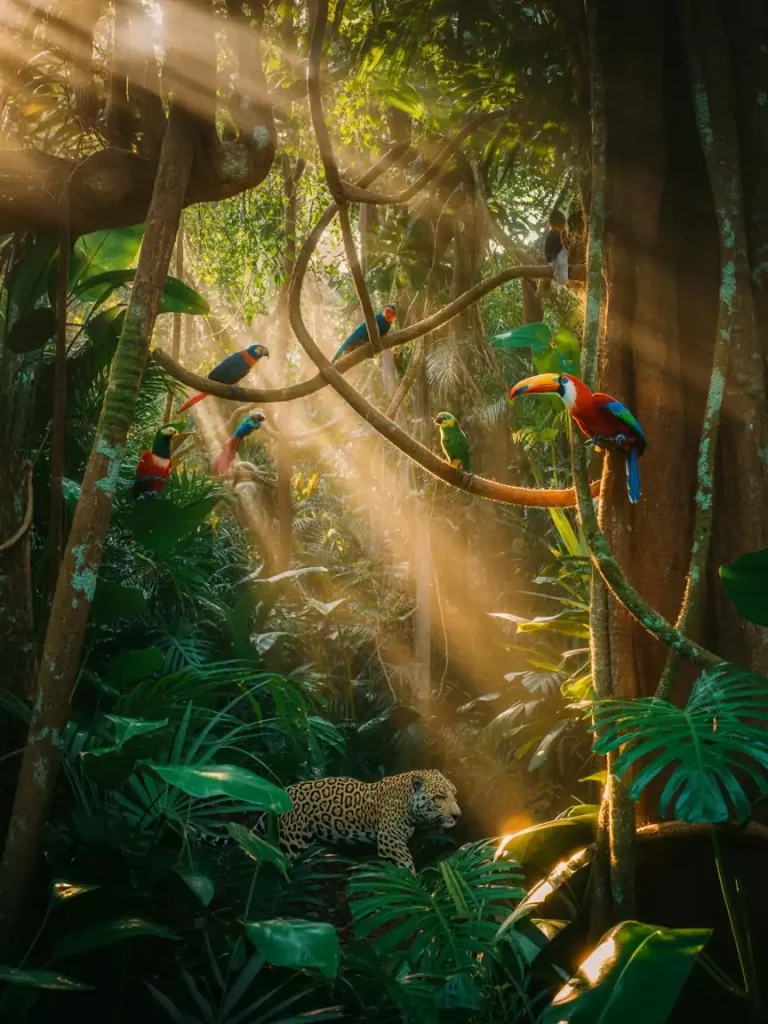
Jungles are among the most vibrant and complex ecosystems on Earth, filled with creatures that display astonishing adaptations. From clever survival strategies to unusual physical traits, jungle animals often behave in ways that defy expectations. Here are 24 surprising facts about jungle animals that reveal just how extraordinary they are.
Hidden Hunters
- Jaguars have one of the strongest bites of any big cat, capable of piercing skulls.
- Crocodiles in jungle rivers can remain motionless for hours before ambushing prey.
- Green anacondas rely on constriction rather than venom to subdue their prey.
- Harpy eagles can snatch monkeys and sloths straight from the treetops.
- Tigers use dense vegetation as cover to stalk prey silently.
Masters of Camouflage
- Leaf insects resemble real leaves, complete with vein-like patterns.
- Chameleons can change color for communication as well as camouflage.
- Stick insects mimic twigs to avoid detection.
- Some frogs blend perfectly into mossy environments.
Strange Adaptations
- Poison dart frogs produce toxins strong enough to deter predators instantly.
- Sloths move slowly to avoid being noticed by predators.
- Toucan beaks help regulate body temperature in hot environments.
- Orangutans use tools, such as sticks, to gather food.
Unique Behaviors
- Capuchin monkeys wash food before eating it.
- Army ants travel in massive colonies that can overwhelm prey.
- Gorillas communicate using a range of vocalizations and gestures.
- Tree frogs lay eggs in water collected on leaves to protect them.
Unexpected Facts
- Some jungle fish can survive in low-oxygen water by breathing air.
- Bats play a major role in pollinating jungle plants at night.
- Certain snakes glide between trees by flattening their bodies.
- Jungle birds use bright colors to attract mates and signal health.
- Some insects mimic dangerous species to avoid being eaten.
- Large cats often drag prey into trees to keep it away from scavengers.
- Jungle ecosystems rely heavily on animal interactions for balance and survival.
Conclusion
Jungle animals showcase an incredible range of adaptations shaped by dense and competitive environments. These surprising facts highlight how life thrives in one of the most dynamic habitats on the planet. The deeper we explore jungles, the more fascinating discoveries we uncover.