
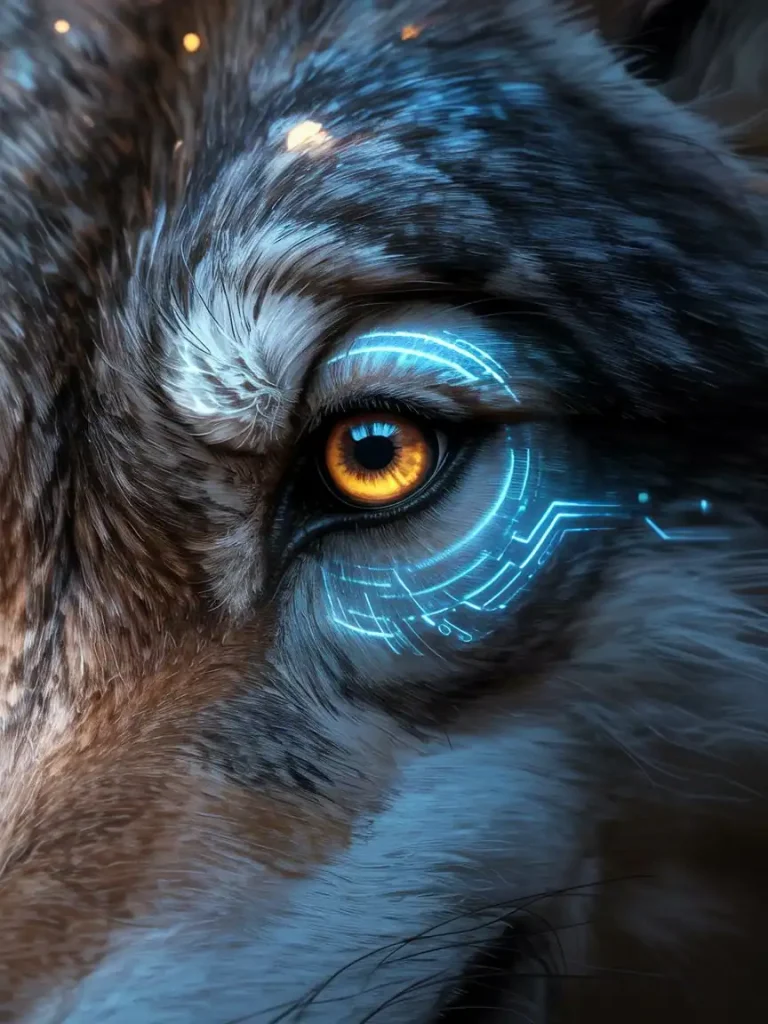
Animals experience the world in ways that humans can barely imagine. Their senses are often far more advanced, allowing them to detect signals, movements, and changes that are completely invisible to us. Here are 22 incredible facts about animal senses that seem almost superhuman.
Extraordinary Vision
- Eagles can spot prey from over two miles away thanks to their incredibly sharp eyesight.
- Mantis shrimp can see up to 12 color channels, compared to just three in humans.
- Some snakes can detect infrared heat, allowing them to “see” warm-blooded prey in total darkness.
- Dragonflies have nearly 360-degree vision, helping them track movement with precision.
- Goats have rectangular pupils that give them a wide field of view to detect predators.
Powerful Hearing
- Bats use echolocation to navigate and hunt by interpreting sound waves they produce.
- Owls can pinpoint the exact location of prey using asymmetrical ears.
- Elephants communicate using low-frequency sounds that travel miles underground.
- Cats can hear ultrasonic sounds that are completely inaudible to humans.
Incredible Smell and Taste
- Dogs can detect certain scents at concentrations as low as parts per trillion.
- Sharks can smell a drop of blood from great distances in the ocean.
- Bears have a sense of smell so strong they can detect food miles away.
- Snakes use their tongues to “taste” the air and track prey.
Sensory Abilities Beyond Human Understanding
- Bees can see ultraviolet patterns on flowers that guide them to nectar.
- Pigeons can sense Earth’s magnetic field and use it for navigation.
- Star-nosed moles can identify and consume prey in a fraction of a second using their sensitive snouts.
- Fish have a lateral line system that detects vibrations and movement in the water.
Extreme Sensory Adaptations
- Pit vipers can strike accurately using heat detection alone, even without vision.
- Seals can track fish by sensing the faint water trails they leave behind.
- Horses can move their ears independently to detect sounds from multiple directions.
- Spiders can sense tiny vibrations through their webs to locate prey instantly.
- Some birds can see polarized light, helping them navigate during long migrations.
Conclusion
The sensory world of animals is far richer and more complex than our own. These remarkable abilities allow them to survive, hunt, and navigate in ways that seem almost like science fiction. Exploring these senses reveals just how extraordinary life on Earth truly is.