
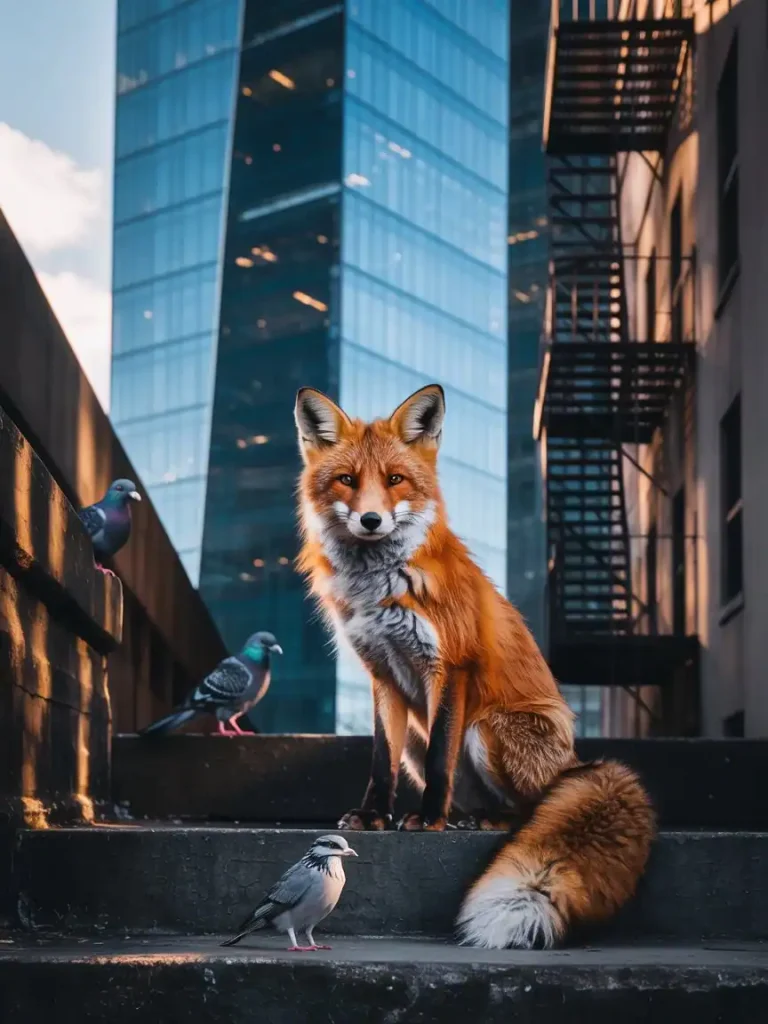
Cities may seem like unlikely habitats for wildlife, yet many animals have adapted remarkably well to urban life. Surrounded by noise, traffic, and human activity, these species find creative ways to survive and even flourish. Their success highlights how adaptable and resourceful nature can be in the face of constant change.
Masters of City Survival
- Pigeons thrive in cities by nesting on buildings that mimic their natural cliffside habitats.
- Rats are highly adaptable and can find food and shelter in even the most crowded urban areas.
- House sparrows live comfortably near humans, feeding on scraps and nesting in structures.
- Raccoons use their intelligence to open containers and access food in urban neighborhoods.
- Crows are known for their problem-solving skills, often using traffic to crack nuts on roads.
Nocturnal Urban Explorers
- Foxes roam city streets at night, scavenging for food and avoiding human activity.
- Opossums adapt well to urban environments by feeding on waste and insects.
- Bats find shelter in buildings and help control insect populations in cities.
- Skunks live on the edges of urban areas, feeding on garbage and small animals.
- Hedgehogs can thrive in gardens and parks, using them as safe foraging grounds.
Birds and Flyers of the City
- Peregrine falcons nest on skyscrapers and hunt pigeons in urban skies.
- Seagulls have adapted to inland cities, feeding on human food waste.
- Swifts use buildings as nesting sites, replacing their natural cliff habitats.
- Starlings form large flocks and take advantage of urban food sources.
- Parakeets have established populations in some cities, surviving in unexpected climates.
Unexpected Urban Adapters
- Coyotes have expanded into cities, hunting small animals and scavenging when needed.
- Squirrels thrive in parks and neighborhoods, using trees and buildings for shelter.
- Lizards can live in warm urban areas, taking advantage of heat-retaining surfaces.
- Frogs and toads inhabit city ponds and gardens, adapting to human-made water sources.
- Snails and slugs flourish in damp urban environments like gardens and sidewalks.
- Bees build hives in walls and rooftops, contributing to pollination even in cities.
Conclusion
These animals demonstrate that urban environments are not just for humans. With flexibility and ingenuity, they have turned cities into thriving ecosystems of their own. Their presence reminds us that wildlife can adapt in surprising ways, even in the most developed landscapes.