
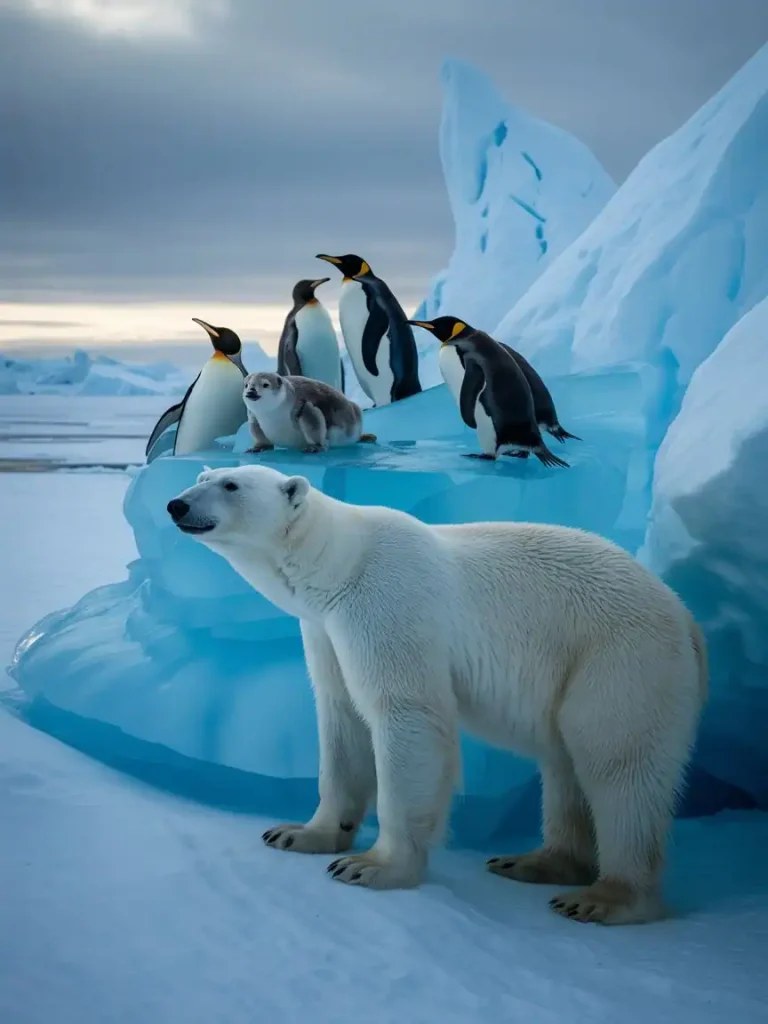
Freezing environments pose a serious challenge to most forms of life, yet some animals have evolved extraordinary ways to endure extreme cold. From producing natural antifreeze to temporarily stopping vital functions, these creatures thrive where others would quickly perish. Their adaptations reveal just how resilient life can be in the harshest climates.
Masters of Ice and Snow
- Arctic foxes survive subzero temperatures with dense fur and a compact body that conserves heat.
- Polar bears rely on thick blubber and insulating fur to withstand freezing Arctic conditions.
- Snowy owls are adapted to cold climates with heavy feathering that protects them from icy winds.
- Musk oxen use long, insulating hair to shield themselves from extreme cold.
- Penguins huddle together to conserve warmth and protect against freezing Antarctic temperatures.
Creatures That Resist Freezing Internally
- Antarctic icefish produce antifreeze proteins that prevent ice crystals from forming in their blood.
- Wood frogs can freeze solid during winter and thaw in spring, resuming normal activity.
- Goldenrod gall flies survive being frozen by producing glycerol that protects their cells.
- Arctic ground squirrels lower their body temperature below freezing while hibernating.
- Painted turtles can survive months trapped in frozen ponds by slowing their metabolism drastically.
Insects and Small Survivors
- Woolly bear caterpillars can freeze during winter and continue their life cycle after thawing.
- Snow fleas remain active on the surface of snow, using antifreeze compounds in their bodies.
- Ice crawlers live in cold mountain environments and function at temperatures near freezing.
- Antarctic midges survive extreme cold by losing most of their body water and entering dormancy.
Marine and Aquatic Survivors
- Beluga whales thrive in icy waters thanks to thick layers of blubber and specialized circulation.
- Weddell seals can dive under ice and maintain body heat in freezing ocean temperatures.
- Krill survive in Antarctic waters by feeding on algae beneath sea ice.
- Icefish species inhabit polar seas where temperatures remain below freezing for most of the year.
Unexpected Cold Survivors
- Reindeer have specialized noses that warm cold air before it reaches their lungs.
- Yakutian horses endure Siberian winters with thick coats and the ability to forage through snow.
- Emperor penguins breed during the coldest months, relying on group behavior and insulation to survive.
Conclusion
These animals demonstrate that life can adapt to even the coldest environments on Earth. Through physical, chemical, and behavioral strategies, they continue to thrive in freezing conditions that would be uninhabitable for most species. Their resilience offers valuable insight into survival and adaptation in extreme climates.