
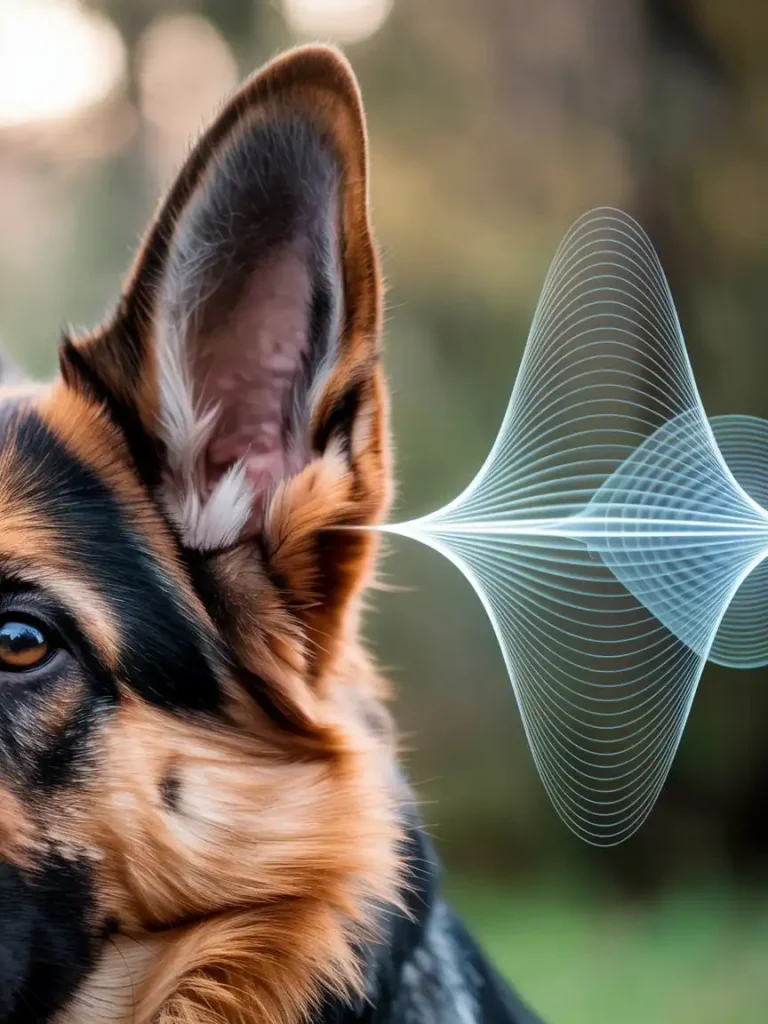
The range of human hearing is limited, but many animals can detect sounds far beyond what we can perceive. Some hear ultra-high frequencies, while others sense deep vibrations or distant noises that seem silent to us. These abilities give them powerful advantages in hunting, communication, and survival.
Masters of High-Frequency Hearing
- Bats can hear ultrasonic frequencies and use echolocation to navigate and hunt in complete darkness.
- Dolphins detect high-frequency sounds to locate objects and communicate underwater.
- Dogs can hear pitches far above human range, which is why they respond to whistles we cannot hear.
- Cats have highly sensitive ears that detect tiny high-pitched noises made by small prey.
- Mice communicate using ultrasonic sounds that are completely inaudible to humans.
Experts in Low-Frequency Sound
- Elephants detect infrasound, allowing them to communicate across long distances through low vibrations.
- Whales use deep, low-frequency calls that can travel across entire ocean basins.
- Alligators sense vibrations in water, helping them detect prey nearby.
- Rhinos may use low-frequency sounds to communicate over long distances.
- Giraffes are believed to communicate using low-frequency hums that humans rarely notice.
Animals With Specialized Hearing Adaptations
- Owls have asymmetrical ears that help them pinpoint the exact location of sounds.
- Foxes can hear small animals moving beneath snow or underground.
- Horses can rotate their ears independently to capture sounds from different directions.
- Rabbits have large ears that enhance their ability to detect distant or faint noises.
- Kangaroo rats can hear predators approaching even in complete darkness.
Unusual and Surprising Hearing Abilities
- Pigeons may detect very low-frequency sounds, aiding in navigation over long distances.
- Seals can hear both underwater and in air with impressive sensitivity.
- Frogs are tuned to specific frequencies, helping them identify calls from their own species.
- Spiders sense vibrations through their legs, effectively “hearing” through surfaces.
- Fish detect sound waves and pressure changes through a sensory system known as the lateral line.
Conclusion
These animals reveal that the world of sound is far richer than humans can experience. Their ability to detect hidden frequencies and vibrations allows them to interact with their environment in extraordinary ways. Studying these senses helps us better understand communication and perception across the animal kingdom.