
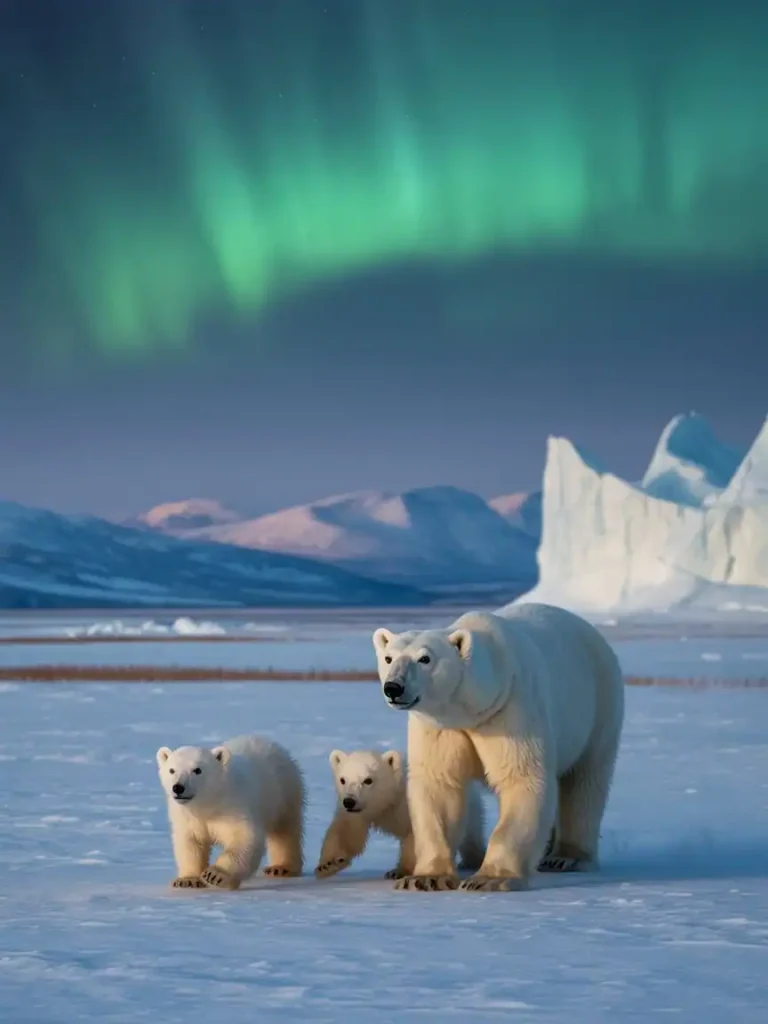
The Arctic is one of the harshest environments on Earth, where freezing temperatures, strong winds, and long periods of darkness push life to its limits. Despite these conditions, many animals not only survive but thrive with extraordinary adaptations. Here are 19 extreme facts about Arctic animals that highlight their incredible resilience.
Surviving the Cold
- Polar bears have black skin under their white fur to absorb and retain heat.
- Arctic foxes grow thick fur that changes color with the seasons for insulation and camouflage.
- Seals have a thick layer of blubber that helps them stay warm in icy waters.
- Walruses use their tusks to haul themselves onto ice and break breathing holes.
Extreme Adaptations
- Some Arctic fish produce antifreeze proteins to prevent their blood from freezing.
- Reindeer have specially adapted hooves that change with the seasons for better traction.
- Snowy owls have dense feathers that cover even their legs and feet.
- Musk oxen have a dense undercoat called qiviut that provides exceptional warmth.
Life in Darkness
- Many Arctic animals rely on heightened senses during long periods without sunlight.
- Some species remain active throughout the polar night instead of hibernating.
- Arctic wolves use their keen hearing and smell to hunt in low visibility.
Unique Behaviors
- Penguins do not live in the Arctic but are often mistakenly associated with it.
- Polar bears are strong swimmers and can travel long distances between ice floes.
- Arctic hares can run at high speeds to escape predators across snowy terrain.
- Some seals maintain breathing holes in the ice and guard them from predators.
Truly Extreme Facts
- Many Arctic animals can slow their metabolism to conserve energy during food shortages.
- Some birds migrate thousands of miles to escape the harshest winter conditions.
- Ice algae form the base of the Arctic food chain, supporting larger animals.
- Despite extreme cold, life in the Arctic remains highly interconnected and balanced.
Conclusion
Arctic animals demonstrate some of the most extreme survival strategies in the natural world. These incredible adaptations allow them to endure conditions that would be impossible for most life forms. Their resilience is a powerful reminder of nature’s ability to thrive even in the harshest environments.