
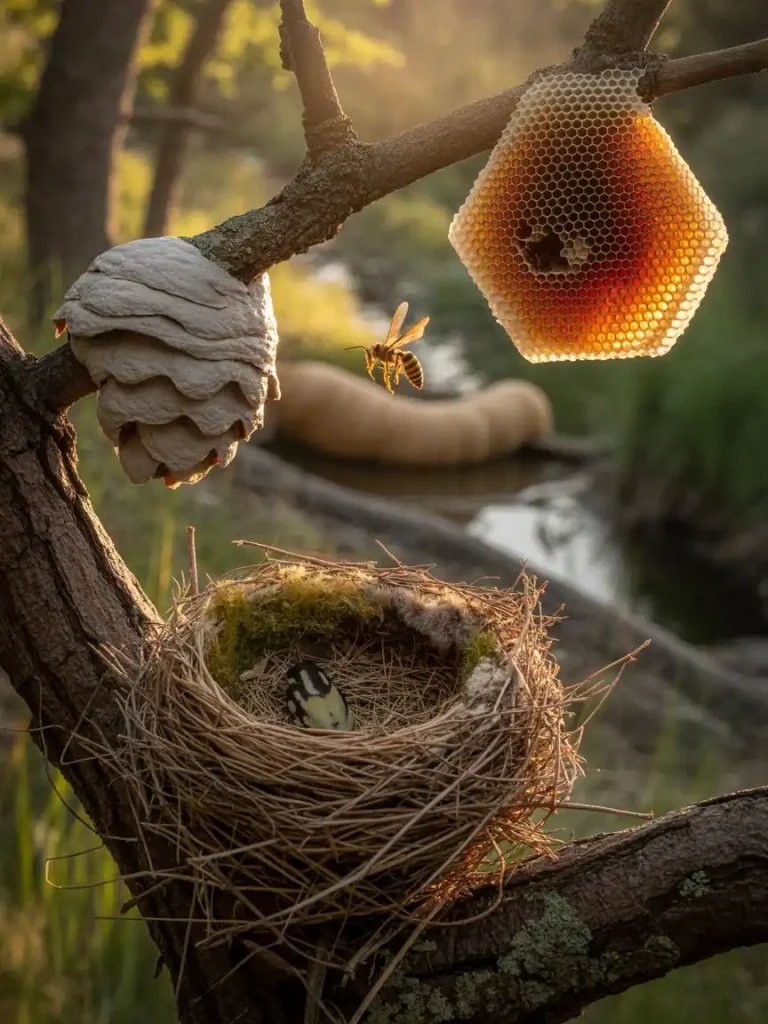
Across the natural world, animals act as skilled architects, constructing homes and tools that rival human engineering in creativity and efficiency. These structures are not only shelters but also serve as traps, nurseries, and protective environments. Their designs reflect instinct, intelligence, and adaptation to specific habitats.
Master Builders of Land and Forest
- Beavers build dams and lodges using wood and mud, creating entire ecosystems around their constructions.
- Termites construct massive mounds with natural ventilation systems that regulate temperature.
- Ants build complex underground colonies with tunnels, chambers, and organized pathways.
- Birds weave intricate nests using twigs, grass, and even human-made materials.
- Bowerbirds create elaborate display structures decorated with colorful objects to attract mates.
Engineers of Water and Wetlands
- Caddisfly larvae build protective cases from sand, pebbles, or plant material in freshwater habitats.
- Pufferfish create detailed circular patterns in the sand to attract mates and lay eggs.
- Stickleback fish build nests from plant material, carefully gluing them together for stability.
- Crayfish dig burrows with chimneys made of mud to manage water levels.
Small Creatures With Big Designs
- Spiders spin intricate webs designed to trap prey with remarkable efficiency.
- Wasps construct paper-like nests by chewing wood fibers and mixing them with saliva.
- Honeybees build hexagonal honeycombs that maximize storage while minimizing material use.
- Leafcutter ants cultivate fungus gardens inside their nests for food production.
Unexpected and Specialized Architects
- Penguins build nests from stones to protect their eggs from melting ice.
- Prairie dogs create vast underground towns with multiple entrances and chambers.
- Mud dauber wasps build tubular nests from mud to house their larvae.
- Weaver birds craft hanging nests with complex weaving techniques to keep predators out.
Conclusion
These animals demonstrate that construction and design are not limited to humans. Through instinct and adaptation, they create structures that serve vital roles in survival and reproduction. Their impressive building skills continue to inspire both scientific study and human innovation.