
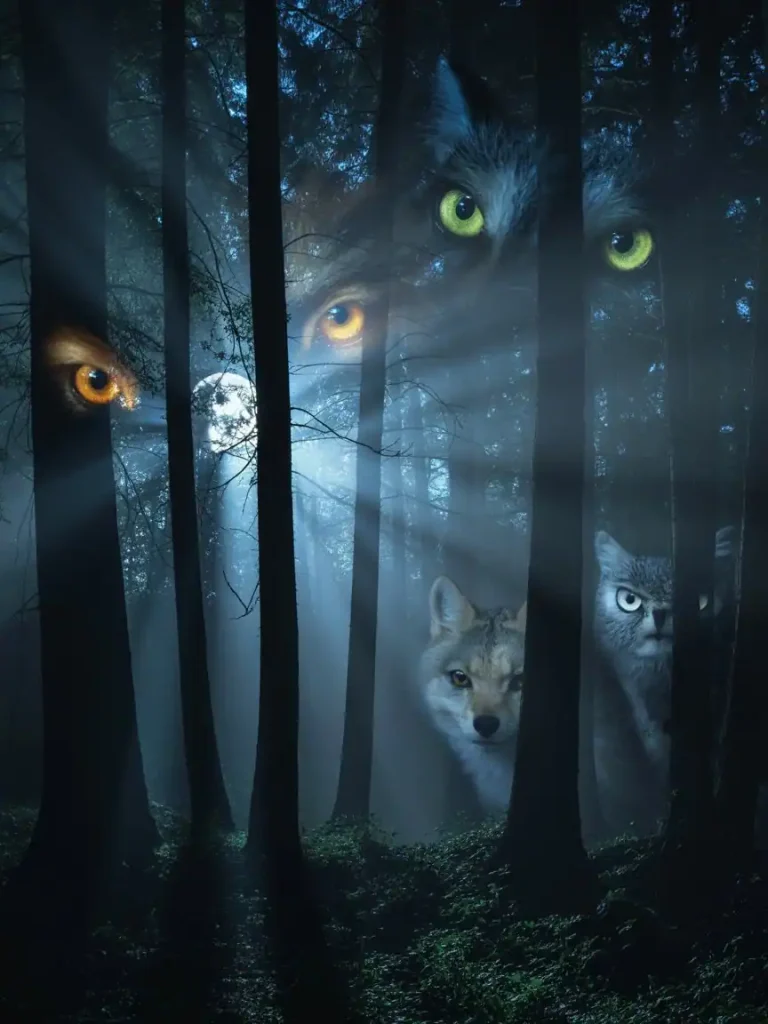
When the sun goes down, a completely different world comes to life. Nocturnal animals have evolved remarkable adaptations that allow them to thrive in darkness while most of the world sleeps. Here are 16 surprising facts about these night-active creatures.
Masters of the Night
- Owls can rotate their heads up to 270 degrees to scan their surroundings without moving their bodies.
- Bats are not blind and actually have functional eyesight in addition to echolocation.
- Leopards prefer hunting at night, using darkness as cover to ambush prey.
- Many desert animals are nocturnal to avoid extreme daytime heat.
Extraordinary Senses
- Cats have excellent night vision due to a reflective layer behind their retinas.
- Aye-ayes use their long, thin fingers to tap on wood and locate insects inside trees.
- Some moths can detect the ultrasonic calls of bats and take evasive action.
- Foxes use Earth’s magnetic field to accurately pounce on prey in the dark.
Unique Behaviors
- Raccoons have highly sensitive front paws that act almost like extra eyes in the dark.
- Hedgehogs roam miles each night in search of food despite their small size.
- Night monkeys are the only monkeys that are fully nocturnal.
- Fireflies communicate using light signals to attract mates.
Unusual Adaptations
- Geckos have specialized eyes that allow them to see color even in very low light.
- Some frogs become more vocal at night to avoid daytime predators.
- Scorpions glow under ultraviolet light due to substances in their exoskeleton.
- Slow lorises have a toxic bite, making them one of the few venomous mammals.
Conclusion
Nocturnal animals reveal just how diverse and adaptable life can be. Their unique abilities allow them to dominate the night in ways that seem almost unbelievable. Exploring their world offers a fascinating glimpse into nature after dark.